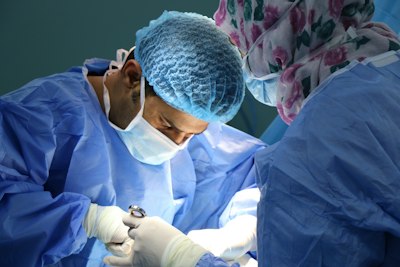
📋 Summary: Smaller incisions, less pain, faster recovery — understand why minimally invasive surgery is the preferred choice for most abdominal conditions.
Laparoscopic surgery — commonly called keyhole surgery — has transformed how abdominal surgeries are performed. What once required large cuts and weeks of recovery can now be done through 3–4 tiny incisions, with significantly less pain and a much quicker return to normal life.
What makes laparoscopic surgery different?
Instead of one large cut, your surgeon makes 2–4 small incisions (5–10mm). A camera (laparoscope) is inserted to project a high-definition view of the abdomen, and precise instruments perform the surgery — all guided by this camera feed.
Key benefits:
- ✓Significantly less pain — smaller cuts mean less trauma to surrounding tissue
- ✓Shorter hospital stay — most patients go home the next day
- ✓Faster recovery — return to work in 1–2 weeks instead of 4–6
- ✓Minimal scarring — tiny marks that fade over time
- ✓Lower infection risk — smaller wounds heal faster and are less exposed
- ✓Better visualization — the HD camera often gives surgeons a clearer view than open surgery
What can be done laparoscopically?
Dr. M.R. Madan Karthik Raj performs the following laparoscopically: - Gallbladder removal (cholecystectomy) - Hernia repair (inguinal, umbilical, incisional) - Appendectomy - Piles and anorectal procedures - Diagnostic laparoscopy
Is laparoscopic surgery safe?
Yes. In experienced hands — like those of a FMAS and FIAGES certified surgeon — laparoscopic surgery carries excellent safety profiles and outcomes comparable or superior to open surgery.
Dr. M.R. Madan Karthik Raj
General & Laparoscopic Surgeon · FMAS, FIAGES
Specialist in minimally invasive surgery and digestive health at Karthik Gastro Clinic, Maravaneri, Salem.